
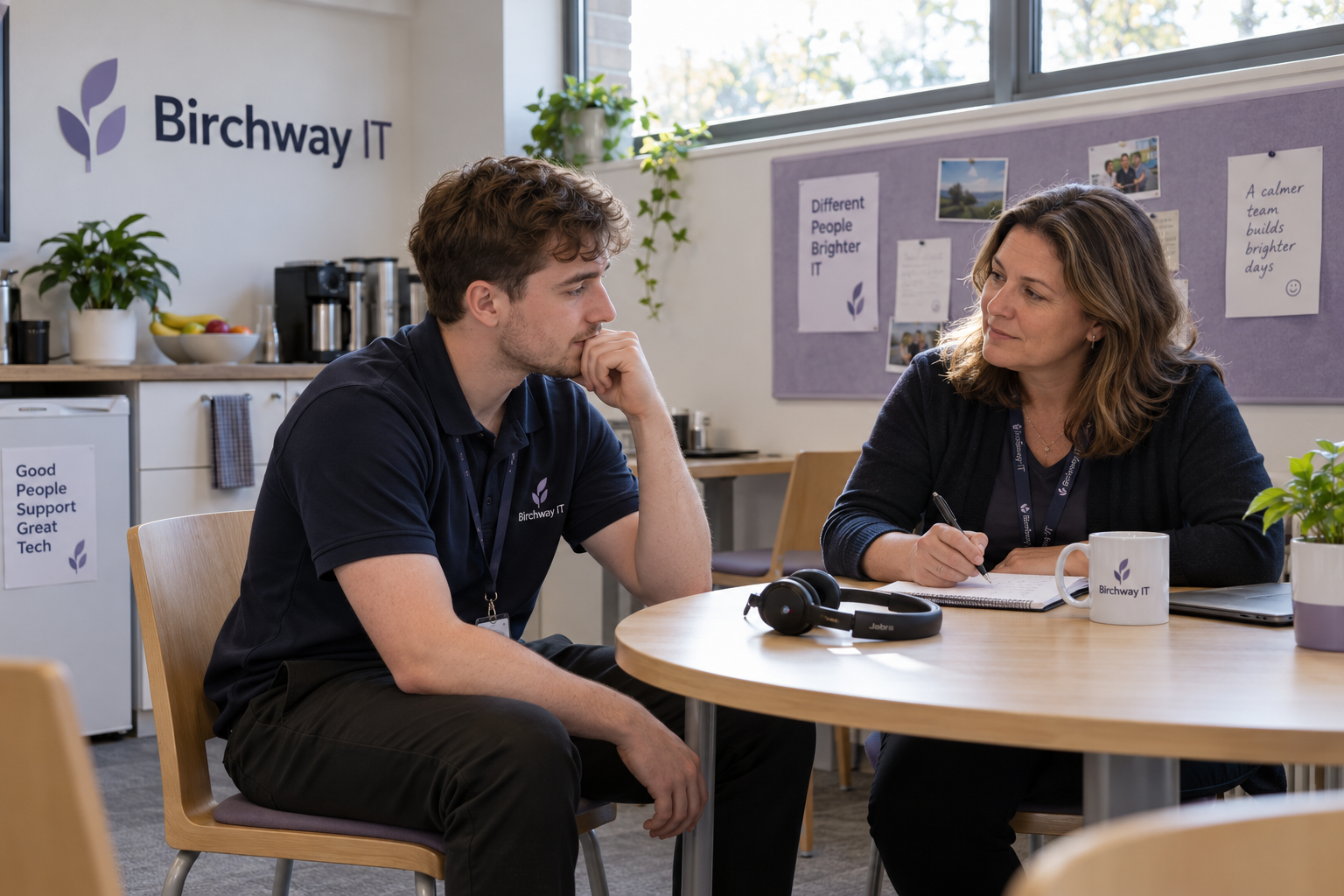
Three stages need owners when you're dealing with abusive customers: stop harmful contact, have management set the conditions, and decide whether the relationship can continue. Put those responsibilities in the staff response before another incident. A technician shouldn't have to defend the client's monthly fee while asking for help.
These are proposed stages for handling verbal abuse, not a requirement to tolerate repeated incidents. An immediate threat needs the safety response at once, including leaving an unsafe situation and obtaining emergency help when necessary. Staff protection can't wait for a commercial review.
Stage One: Stop Harmful Contact
Give technicians an explicit route to end an abusive interaction and reach a manager. A service complaint can be investigated without accepting personal insults. If the conduct continues or the technician feels unsafe, the manager takes over the response.
A proposed script is: I can help with the support issue, but I can't continue while you speak to me that way. I'm ending the call and asking my manager to contact you. The technician shouldn't need to debate that boundary throughout the same interaction.
The manager checks on the person privately and arranges appropriate support or cover. Keep the underlying service issue with a responsible owner. Taking over the work shouldn't mean sending the affected technician directly back to the same contact.
Record the incident factually in the appropriate restricted internal record. Preserve relevant messages using your normal information-handling process. Check visibility before recording personal incident details in a system whose notes may be exposed to the client.
Stage Two: Put Management in the Conversation
Have the service manager gather the report and relevant service history. The account owner then contacts someone at the client who can address the conduct. Explain what occurred and the conditions required for further contact with staff.
The proposed wording is: We will investigate the service issue. Personal insults toward our staff must stop, and communication about this matter will go through [named manager]. Replace the placeholder with someone who accepts the assignment and has a backup route.
Don't call this relationship optimization. Name the conduct and the person responsible for the next step. An instruction to communicate better leaves the next technician to interpret the boundary again.
Ask the client contact to confirm the working arrangement. A designated management route may be appropriate while the owner reviews continued service. Decide it from the actual risk and agreement position rather than volunteering another technician to absorb the same treatment.
Investigate any service failure on its evidence. Your business may owe a correction without the technician owing continued exposure to abusive conduct. Keep those responsibilities separate in the work record.
Tell affected staff what contact arrangements now apply, while limiting unnecessary personal detail. Record the decision and who will review it. A condition known only to the owner won't help the person receiving the next call.
Stage Three: Decide Whether Service Can Continue
The business owner decides whether the client can meet the conditions for continuing. Consider the seriousness of the conduct and the client's response. A severe incident can go directly to that decision; these stages aren't an incident allowance.
An invoice doesn't buy a conduct waiver. Keep using the model's quarterly review of client margin and fit, but bring a reported incident forward when it happens. The next scheduled account review isn't the right reason to leave a current protective decision open.
Host Andrew Moore argues that a healthier sales pipeline can make an MSP more willing to set boundaries around poor-fit work. In that discussion, the Ashton team describes eventually ending a verbally abusive client relationship and credits planning alongside other factors. That is their account, not proof that a particular exit is affordable for your business.
The model favors replacing bad revenue with good so the business doesn't shrink. Have finance assess the effect of losing this client while sales develops suitable replacement business. Keep immediate protective arrangements in place while that planning proceeds.
Before a suspension or termination notice, have counsel review the actual agreement and proposed action. Confirm the responsibilities that continue during the transition. A decision to end the relationship needs an authorized implementation plan as well as an owner's agreement.
Keep client access and data out of an argument about leverage. Assign approved offboarding to a responsible owner and protect information through the handoff. Don't make the affected technician personally negotiate the commercial exit.
Assign the Follow-Up Before Closing the Report
I'd put the responsibilities below in the response sheet with real names and reachable contacts. The route must still work when the owner is unavailable. Test where the handoff occurs between protecting the person and deciding the relationship.
- The technician reports the incident through the internal route and identifies any immediate safety concern.
- The service manager arranges staff support and safe cover for outstanding work.
- The account owner records the client conversation and the contact conditions.
- The business owner decides whether the relationship can continue and authorizes the next commercial step.
- The finance lead assesses the revenue and cost effect without assuming every allocated cost disappears.
- The offboarding owner carries out the approved transition if service is ending.
Confirm that the technician knows who received the report and what management will do next. Keep them informed about measures affecting their assignment. They shouldn't have to repeat the incident to several people merely to establish whether anyone is acting.
If the client bypasses the agreed route, give receiving staff a clear way to transfer it to management. Keep that instruction current until the decision changes. A search through old chat messages isn't a dependable contact policy.
Check Who Owns the Next Contact
When the board opens on Monday morning, who owns this client's next contact and the service work still required? Give both a workable assignment. The affected technician should know how to stop renewed harmful contact without first arguing the account's value.
Walk a hypothetical abusive call through the response with the desk lead. Check who takes over and where the report belongs. Repair any step that ends with a technician being told to tolerate the behavior until someone senior finds time.
Publish the boundary with the actual manager and backup contacts. Have the people expected to use it check that the route works. A reported incident should start an owned management response while the technician and the remaining service work receive appropriate support.

mspoutpost.com/articles/dealing-with-abusive-customers-protect-your-msp-staff
Written by Megan Friesen
MSP Outpost publishes information, not legal, financial, insurance, tax or compliance advice, and reading it creates no professional relationship. For decisions about your business, talk to a qualified professional.