
At the MSP model's US price, 20 seats times $225 equals $4,500 a month. When you're over-servicing clients, record the extra work and cost it against that fee before deciding what to change. An unbilled hour consumes capacity whether the owner approved it or nobody noticed it.
I'd start with the agreement and the time record. Separate work already included in the fee from an agreed exception and work that should have been quoted separately. Then put the cost beside the client's margin so the decision belongs to the owner rather than the technician taking the request.
Give the Extra Hour a Cost
Use productive delivery hours when allocating labor cost. The model's US Tier 2 salary is $62,000, and its general burden multiplier gives $62,000 × 1.25 = $77,500 annually. Burden is the modeled employer cost above salary, including taxes, benefits, and insurance.
The model supplies 1,660 available hours after its leave and administrative allowance. At 70% service utilization, that is 1,660 × 70% = 1,162 productive delivery hours a year. The allocated labor cost is $77,500 / 1,162 = about $66.70 per productive hour.
That allocation includes the effect of paid time that isn't productive delivery time. It doesn't mean every additional hour causes another $66.70 to leave the bank. Check whether the work absorbs existing capacity, creates overtime, or requires more staffing before estimating its effect on company cash and profit.
Put the Hour Beside Client Margin
Say the 20-seat client earns exactly the model's 50% managed-service gross-margin target before an additional hour is assigned to it. The target includes burdened delivery labor and tools. Gross profit is revenue less those direct costs, before sales spending and overhead.
| Illustrative Monthly Calculation | Working | Result |
|---|---|---|
| Managed-service revenue | 20 seats × $225 | $4,500 |
| Gross profit before extra work | $4,500 × 50% | $2,250 |
| Additional Tier 2 hour | 1 productive hour at the calculated allocation | About $66.70 |
| Gross profit after the allocation | $2,250 minus $66.70 | $2,183.30 |
| Revised gross margin | $2,183.30 divided by $4,500 | About 48.5% |
The illustration holds the fee and other allocated delivery costs constant. It shows how an additional hour changes the client's cost allocation, not a measured result for your client. Replace the planned hour and labor basis with the work you actually record.
Below the 50% target doesn't mean the client has become loss-making. In this illustration, $2,183.30 remains to contribute toward sales, overhead, and profit. Use the result to investigate the service economics rather than treating a target miss as an instruction to remove the client.
Keep Cost and Missed Billing Separate
The model's blended project rate is $185 an hour. If the extra request is genuinely outside the agreement and the client would have purchased the work, an unbilled project hour could mean a missed $185 invoice. The contract and the client's decision determine whether that sale was available.
Don't add that possible invoice to the labor allocation and call the sum a loss. They answer different questions: what effort was consumed, and what revenue might have been earned. Keep the proposed project price separate from its delivery cost when comparing the alternatives.
An included support request isn't over-servicing merely because it takes longer than expected. Review the promised scope and the reason for the effort. An environment problem, incomplete work record, and an unauthorized extra need different decisions.
Make the Work Visible in the PSA
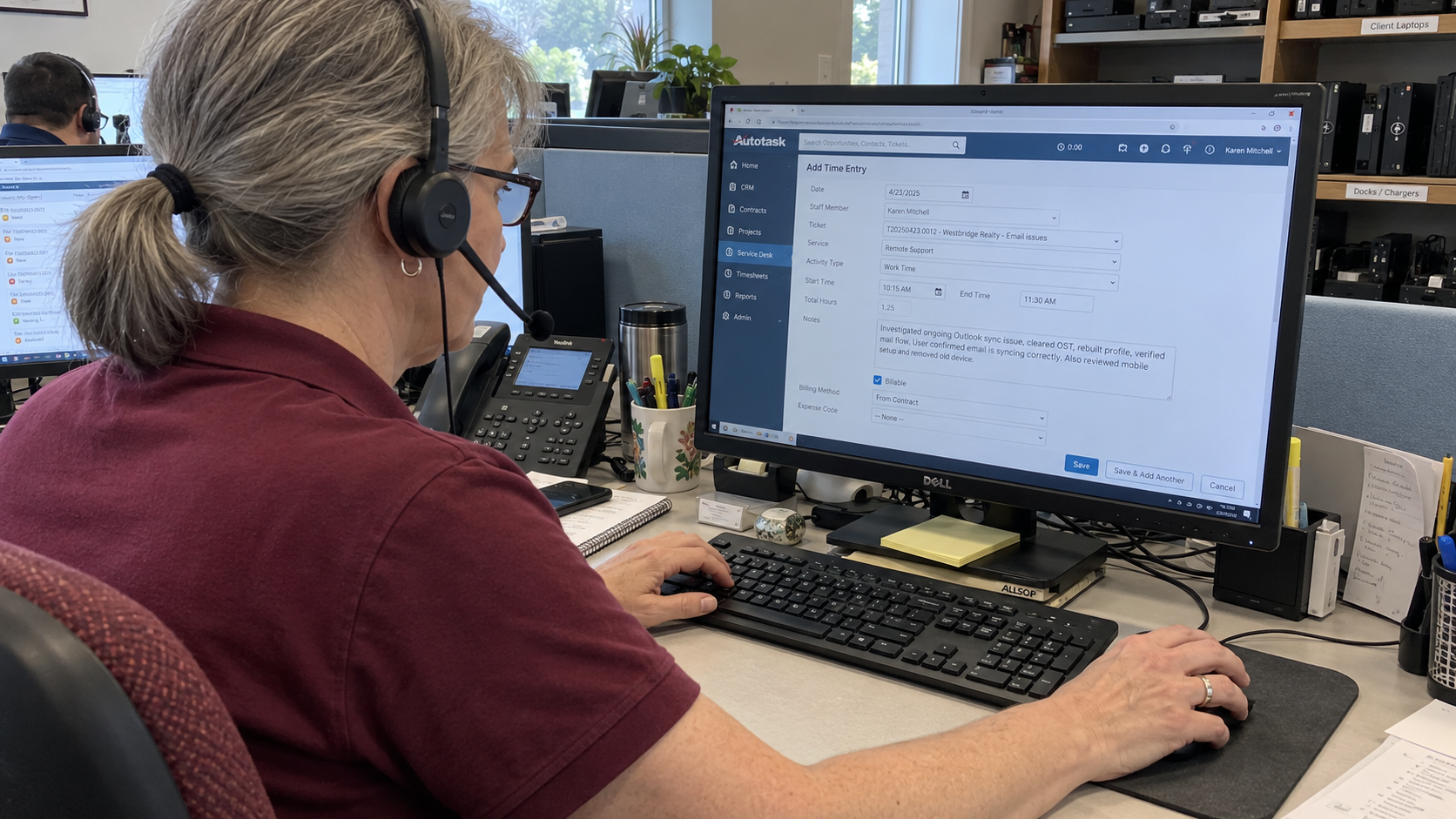
Have technicians record the work against the right client even when it won't be billed separately. Use a category or note that distinguishes a goodwill exception from normal included support. Keep the description specific enough for the service lead to compare it with the agreement.
A growth hack won't enter the missing time for you. My view is that the first useful improvement is a record the technician can complete during the work. Avoid making the person invent a commercial decision just to close the ticket.
Ask the service lead to check that the extra time isn't already counted elsewhere. An onsite visit, support ticket, and project record can refer to the same work. Reconcile them before adding hours to a client-margin calculation.
Choose Your Review Period and Trigger
The owner should choose the review period from representative workload, contract scope, and the risk of waiting. Check whether unusual project activity or an unresolved incident distorts the period. A fixed number of bad months cannot tell you that the comparison is representative.
Set the intervention trigger from the exposure you are willing to carry and the service you've promised. Record who can approve an exception, what work it covers, and when the decision will be reviewed. Keep an urgent scope or risk issue visible even if the financial review isn't due yet.
The model calls for grading clients on margin and fit each quarter. Use the extra-work log as one input to that assessment. It doesn't replace a timely decision about an unauthorized commitment or a client issue that needs attention now.
Give the Technician a Clear Handoff
My test is: what does this do to the board on Monday morning? The technician needs a next step when a request appears to be outside the agreement. Name the person who can check scope and arrange a quote without leaving the technician to negotiate the contract.
- Technician: record the requested work and time against the client, with the scope question visible.
- Service lead: compare the request with the agreement and check the labor record for duplication.
- Account owner: explain the included service and arrange approval for separately priced work where appropriate.
- Business owner: approve any goodwill exception and record its boundary and review point.
- Finance owner: update the client cost view and show the effect beside the recurring fee.
If the environment is generating avoidable work, investigate a refresh or delivery improvement before changing the recurring price. The model favors fixing the client economics before repricing. Check the proposed work and contract scope, then quote a project where it is outside the agreement.
Where repricing is needed, start with the weakest economics and plan for any revenue at risk. The model keeps concessions off the monthly recurring fee. A deliberate, bounded exception can remain a commercial choice; make its cost and owner visible.
Start with an extra-work record you can trace back to an actual request. Cost it once, compare it with the service promised, and agree the next action with the person responsible. Choose the review timing from that exposure rather than borrowing a duration from someone else's client.

mspoutpost.com/articles/over-servicing-clients-what-the-extra-hour-costs-you
Written by Megan Friesen
MSP Outpost publishes information, not legal, financial, insurance, tax or compliance advice, and reading it creates no professional relationship. For decisions about your business, talk to a qualified professional.