
Thirty minutes of labor per ticket resolved at Tier 1 is a model assumption. It isn't an individual speed limit. Choose three technician performance metrics around work the person can influence, then review the cases behind the counts privately. I'd start with the commitments that make the next step usable to another person.
My test is what the measure does to the board on Monday morning. It should help the technician decide the next useful action and show the manager where support is missing. A score that only makes an easy closure more attractive fails that test.
Keep Capacity Planning Separate From Coaching
The model staffs the desk from workload and labor time. That's a way to plan the people needed for the work. More closed tickets doesn't establish a greater contribution than a colleague's difficult escalations.
Use the thirty-minute Tier 1 handling assumption in that context. It measures modeled labor for work resolved at that tier. It doesn't measure elapsed resolution time. An individual case can need different effort from the assumption.
Before judging a change, check the work assigned and the support available. The technician may have taken more difficult work, or a missing permission may have stalled the next step. Review those explanations against the ticket instead of reading a performance verdict from the total.
Measure Whether Handoffs Can Be Used
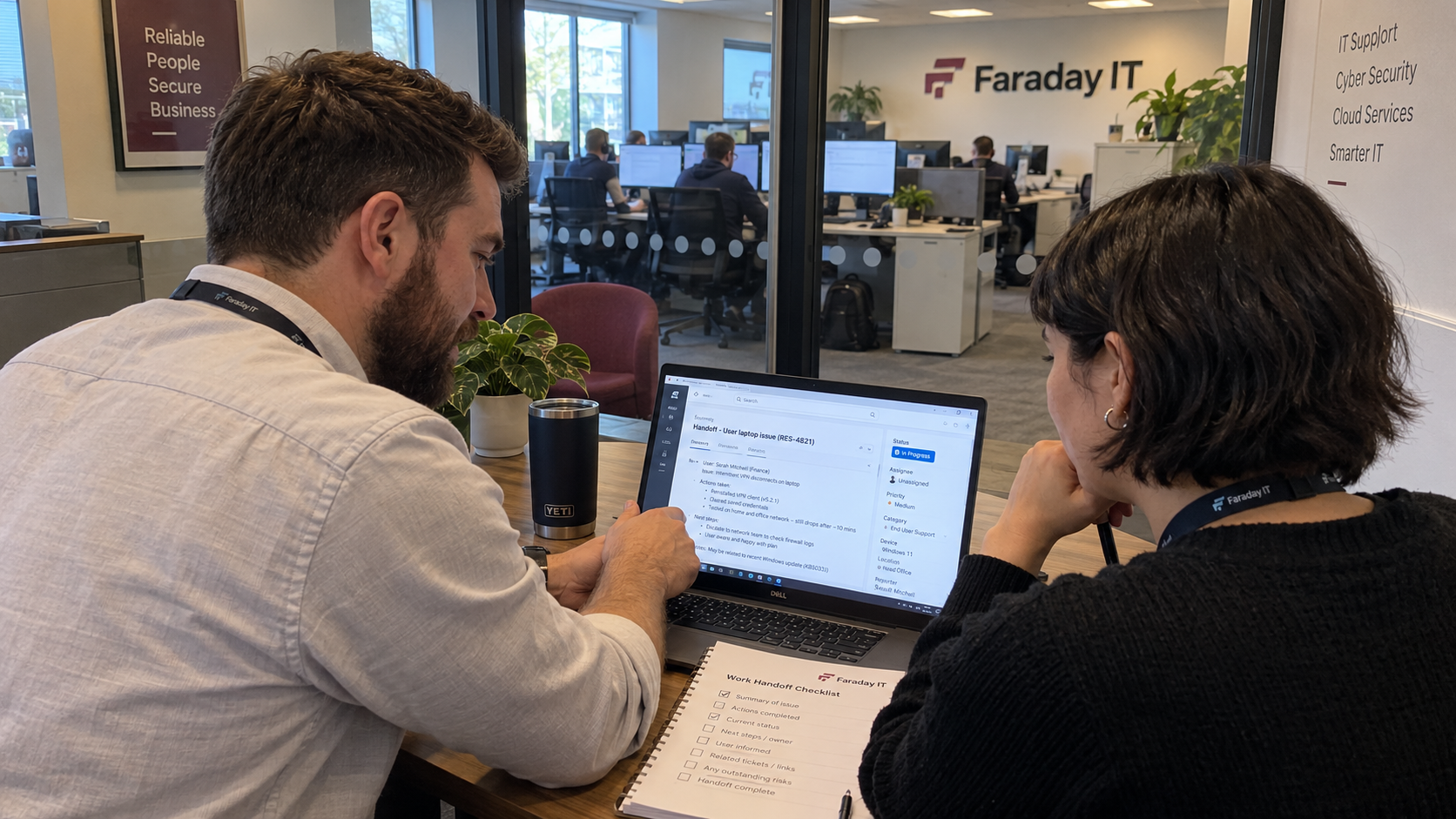
For this proposed measure, count reviewed handoffs that let the receiving person act without asking the sender for missing information. Divide that by all eligible handoffs reviewed. Keep the counts beside the rate so a small review doesn't look more conclusive than it is.
Agree what the receiving team needs for the relevant work type. A useful record describes the work already done and the remaining action. It names the recipient or agreed receiving queue, with any blocker clear enough to understand.
Record why a handoff needed clarification. Distinguish information the sender could provide from a new question that arose during investigation. A follow-up question isn't automatically a failed handoff, and a receiving team can need to improve its own instructions.
The technical lead owns the review standard. The technician checks the handoff against it, and the manager arranges support when the standard can't be met with the available tools or access. Keep the case reference so the discussion can lead to a concrete correction.
Measure Whether Agreed Updates Happen
Count client updates delivered by their agreed time, then divide by the eligible updates the technician owned in the review period. Use the actual commitment recorded on the ticket. Don't invent a universal response interval to make the report easier to build.
An update can explain a delay without claiming the technical work is finished. Check whether it gave the client useful information and a clear next expectation. An empty message sent to satisfy the timer may pass a timestamp check while failing the communication task.
Confirm who owned the update. If the dispatcher owned the update, don't score the technician for the dispatcher's missed commitment. If an incident changes the workload, the service lead needs a way to reassign the update. Don't assume the technician can do everything at once.
Keep any revised commitment in the history with its reason. Otherwise moving the date can make the metric look better without improving service. Discuss whether the change was appropriate before deciding what the result means.
Measure Whether Resolution Was Checked
Count eligible reviewed closures with the agreed verification evidence. Divide by all eligible closures reviewed. The technical lead defines the check for that work type.
Record the test and its result. Don't accept a checked box as proof that the service works.
Keep technician verification distinct from client confirmation. A technical check can establish that the required function works. A user's response can establish their experience.
Follow the closure policy for the case. Label an administrative closure accurately when the fix hasn't been confirmed.
Review reopened work alongside this measure. A reopening can expose an inadequate check, but it can also concern a different problem. Read the case before attributing it to the closing technician or treating it as evidence that the original work failed.
Ray J. Green recommends asking how a target could improve without the intended result improving, then choosing a balancing measure. His examples concern sales activity. I'd apply that question here: check whether the recorded verification matches what later happened on the ticket.
Use the Results in a Private Work Conversation
Keep the review period and selection method consistent enough to compare like work. State what was included and which exclusions were applied. A manager who selects only the most awkward cases has produced a case review, not a representative performance rate.
Don't post a ranking. Compare the technician’s relevant work with the agreed standard and their own previous evidence. A mixed queue gives you no basis for assuming that every person had the same opportunity to produce the same counts.
The trophy won't write the handoff note. Ask the technician to explain a case that needs improvement and what would make the next attempt easier. Then check whether the obstacle belongs to the individual or to the way the desk works.
I've no use for a productivity score nobody can explain. Say which handoff lacked a next action or which commitment was missed. A concrete observation gives both people something they can check.
Give Each Improvement an Owner
Use the following proposed checklist to turn the review into work:
- The team lead selects the relevant case and confirms that the record supports the observation.
- The technician explains the task and identifies what they could change or what support they need.
- The technical lead clarifies the standard or provides the agreed coaching, using an example appropriate to the work.
- The service manager resolves workload or authority barriers that the technician can't remove.
- The team lead agrees a follow-up date with the technician and checks whether the change was usable in subsequent work.
Set any desired improvement from the desk’s own starting evidence and the standard the work needs. The model supplies no pass percentage for these proposed measures. Review a disappointing result before attaching a conclusion about effort or capability.
Choose a measure that answers an actual coaching question on your desk. Define its eligible work and review the first cases with the technician before relying on a chart. Keep it only if it helps the person and manager make a better decision about the next piece of work.

mspoutpost.com/articles/technician-performance-metrics-your-desk-can-use-privately
Written by Megan Friesen
MSP Outpost publishes information, not legal, financial, insurance, tax or compliance advice, and reading it creates no professional relationship. For decisions about your business, talk to a qualified professional.