By the end of this guide you will know, for one client and one vendor increase, exactly how much of it you are carrying today, whether to pass it through, absorb it or split it, and what to say in the renewal meeting so the increase lands as a fact rather than a fight.
The Increase Is Already Yours
Vendors raise prices to you on their schedule, not your client's. Microsoft's July 2026 list changes moved Business Basic from $6 to $7 and Business Standard from $12.50 to $14 per user per month, with E3 and E5 rising by three dollars each, as Pax8 briefed its partners in May. If you resell those seats at a fixed price under a contract that renews in March, you have been paying the difference since July. Multiply the gap by the seats and the months to March; that is the number the renewal conversation is about.
Do that arithmetic for every vendor line on the account, not just the one that made the news. A security vendor's five percent on 400 endpoints is often larger than the headline change.
Pass Through, Absorb, or Split
There are three honest answers and one dishonest one. The dishonest one is to raise the client's price silently and hope nobody reads the invoice.
- Pass through: the client pays the vendor's increase at the vendor's date. Right where the line is itemised on the invoice and the contract says resold licenses move with the vendor's price. Say it in writing the week the vendor announces, not at renewal.
- Absorb: you carry it. Right where the increase is small against the account's margin and the renewal is close; wrong where it turns the account unprofitable, because you will absorb the next one too.
- Split: the client's price moves at renewal to a bundle rate that covers the new cost, and you carry the months in between. This is the usual answer for a bundled per-user price, and it is what the renewal meeting is for.
Before the Meeting
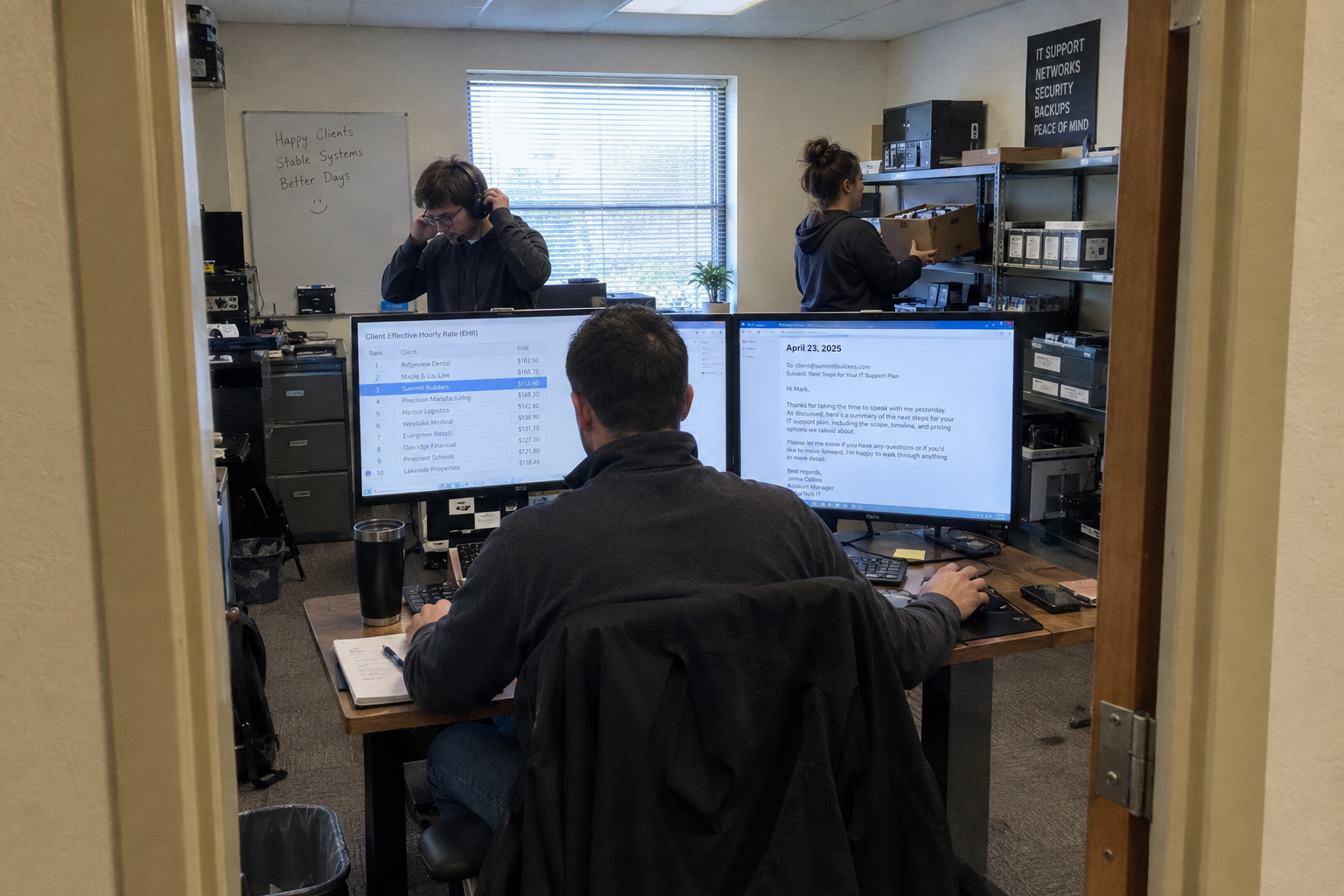
Bring one page. On it: the account's current monthly price, the vendor costs that changed with their dates and their sources, the effective hourly rate on the account for the last year, and the number you need. Bring the vendor's own announcement, because a client who can read the price change on the vendor's page stops thinking of it as yours.
Decide your floor before you sit down. If the account cannot be made profitable at a price the client will accept, the meeting is about an orderly exit, and it is still worth holding well.
The Conversation
Open with the vendor's change, in their words, with the date. Then the effect on this account, in dollars per month. Then what you propose: the new bundle price, the date it starts, and what stays the same. Stop talking. The client's first question tells you which of the three objections you are dealing with: they were not told, somebody else is cheaper, or they want a longer term for a smaller move. The answers are the same as for any price increase, and they are in the guide on raising prices.
What you do not do is apologize for a vendor's decision, or discount your own labor to make somebody else's price rise disappear. Your margin is the thing the client is actually paying for: the people who answer the phone.
Fix the Agreement so the Next One Is a Notice
The renewal is the moment to change the words. Three clauses close this for good:
- Resold licenses and third-party subscriptions are billed at the vendor's current price, and move when it moves, with thirty days' notice.
- The bundled per-user rate is reviewed annually against documented cost changes, with a cap the client can plan around.
- Seat counts are true-ups, monthly, from the tools, not annual guesses.
With those in the agreement, the next vendor increase is an email with a date in it. Without them, it is this meeting again next year.

mspoutpost.com/articles/renegotiating-a-renewal-when-seat-prices-rise
Written by Graham Whitfield
MSP Outpost publishes information, not legal, financial, insurance, tax or compliance advice, and reading it creates no professional relationship. For decisions about your business, talk to a qualified professional.