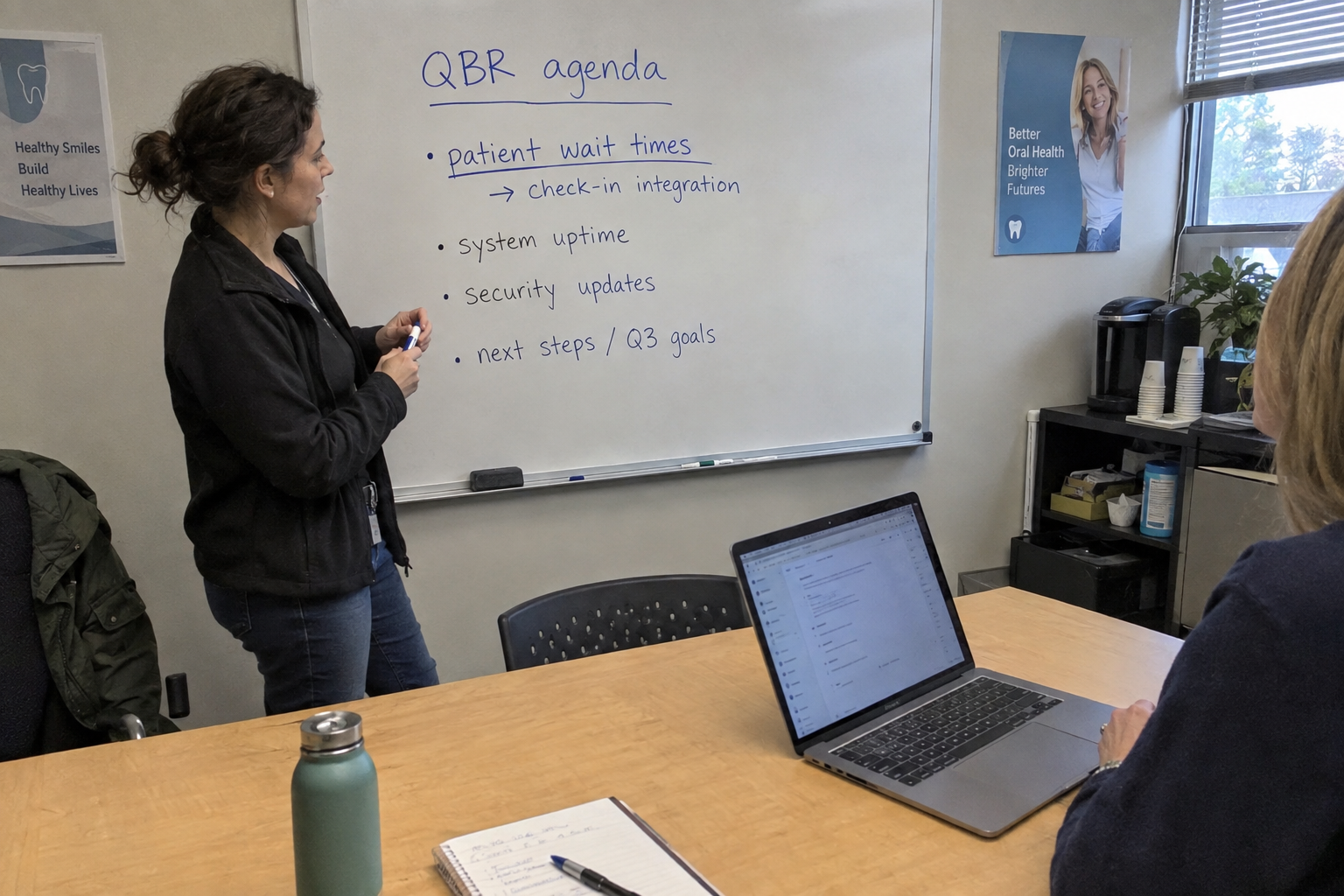
Picture the QBR you ran last month. Slide one was ticket volume, slide two was ticket volume by category, and by slide three the owner was checking their phone. You left knowing you'd delivered a report, not a reason to stay.
Stop running ticket recaps. Run a business review instead. When the first half of the meeting is about the client's goals and pains, not your tickets, you become the partner they renew with. And that trust is what lets you raise the price in the same meeting without losing them.
Your QBR Is a Ticket Recap, Stop That Today
A QBR that opens with a ticket count tells the client you're a vendor. A vendor gets shopped. A partner gets renewed.
The fix is to flip the agenda. Lead with their business, and make the ticket metrics supporting evidence, not the headline.
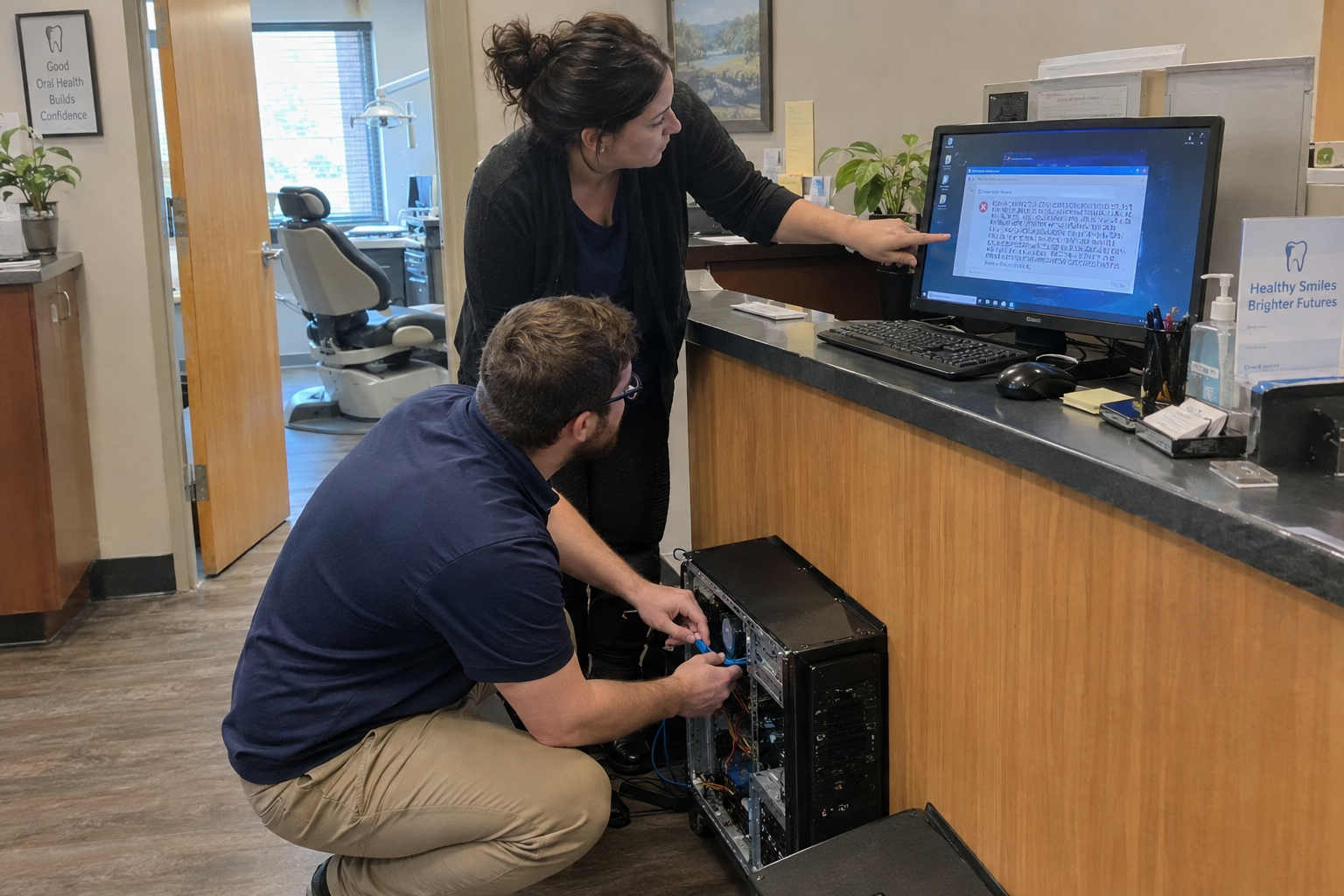
Say your client is a dental practice. The owner cares about patient wait times, not server patches. If you open with the integration that cut check-in time by four minutes, you've shown value. The patch report goes on slide five, where it belongs.
Why change anything? Because the current format is wasting the one hour a quarter where the decision-maker actually pays attention. That hour is your best shot at the renewal and the price increase. Spend it on tickets and you've spent it on nothing.
The 30-Minute Business Review Template
Here's the agenda I'd use. It's 30 minutes, not an hour, because the client's time is the one thing you're competing on.
- 5 minutes: their business wins since the last QBR. Ask, don't tell.
- 10 minutes: their top three goals for the next year, and what IT does to support each one.
- 5 minutes: a live demo of value you've already delivered. Security training you rolled out, a speed improvement, a new tool.
- 5 minutes: one forward-looking IT project that supports a goal they named.
- 5 minutes: tickets. A one-page executive summary, not a log dump.
Walk the dental practice through it. Their goal is shorter patient wait times. You show how the new patient-management integration cuts check-in time. The ticket metrics go in the last five minutes, as proof the infrastructure held up while the integration did its job.
Prep takes about an hour per client. You need to know their goals before you walk in. If you don't, a ten-minute call with the owner beats guessing.
This format only works if the client has a business goal you can tie IT to. A very small client, under ten employees, may only care that things work and what it costs. Scale it down: five minutes on their goals, five on tickets, done. Don't force the business talk on a client who'll find it condescending.
How to Raise the Price in the Same Meeting
After the business review, you've shown value. That's the moment to bring up money, not six months later when the value is a memory.
Frame it as a partnership investment, not a cost increase. The script: 'To keep supporting your goals, we're investing in our service. Here's what changes, and here's the new pricing.'
Tie the increase to something they can see. Security training you rolled out, faster response times, a new backup tool. If you're raising the price just because you haven't in three years, you'll get pushback, and rightly so.
Keep the increase moderate, single-digit, unless you've added a substantial new service. A 5% increase with a visible improvement is defensible. A 20% increase with the same service is a resignation letter.
Give an early-renewal incentive. The dental practice gets a 5% increase, but if they sign the renewal now, they get a free offsite backup upgrade. That turns the ask from a demand into a deal.
Only raise the price in the same meeting if you've just demonstrated value and you have the authority to negotiate. If either is missing, start the conversation now and price at renewal. You don't want to be the account manager who has to call their boss for permission in front of the client.
Start the Renewal Conversation 90 Days Early
The QBR is where you plant the seed. Ask about their plans for the next 12 months. What's the one thing they want to accomplish? Then book a separate renewal call 90 days before the contract ends.
Why 90 days? Because it gives you time to handle objections without a gun to your head. The dental practice says they plan to open a second location. You position the renewal as the foundation for that expansion, and you get a commitment before a competitor can even start talking.
Before you set that 90-day date, check the contract. Auto-renewal and notice-period clauses can force the conversation earlier. If the contract auto-renews with a 120-day notice, 90 days is too late. Know the terms before you promise a timeline.
Track every renewal date in your CRM or a spreadsheet. A missed notice period puts you in a last-minute bargaining position, and that's where clients get picked off.
When This Approach Falls Apart
Be honest with yourself. This works when the client has a business goal you can tie IT to, and when the increase is justifiable. It fails when the client is a price-only buyer, when the increase is more than a moderate percentage without a new service, or when your account manager can't negotiate.
Some clients will leave over a price increase, even when the value story is good. Expect to lose a client or two each time you raise prices. That's not a failure. The clients who stay are the ones who see you as a partner, and they're worth more than the ones who leave.
Your Monday Move: Pick One Client and Rebuild Their QBR
Don't try to change every QBR at once. Pick the client with the strongest relationship and the least price sensitivity. Rebuild their QBR using the template. Run it before the next scheduled meeting.
For that client, gather their top three business goals. If you don't know them, make a quick call. Slot the ticket metrics into the final five minutes.
Once that one goes well, you'll have a template and a story to tell the next client. And the next. That's how you turn a QBR from a chore into the reason they renew.

mspoutpost.com/articles/run-a-qbr-that-renews-the-contract-and-sets-up-the-price-increase
Written by Natalie Brandt
MSP Outpost publishes information, not legal, financial, insurance, tax or compliance advice, and reading it creates no professional relationship. For decisions about your business, talk to a qualified professional.