
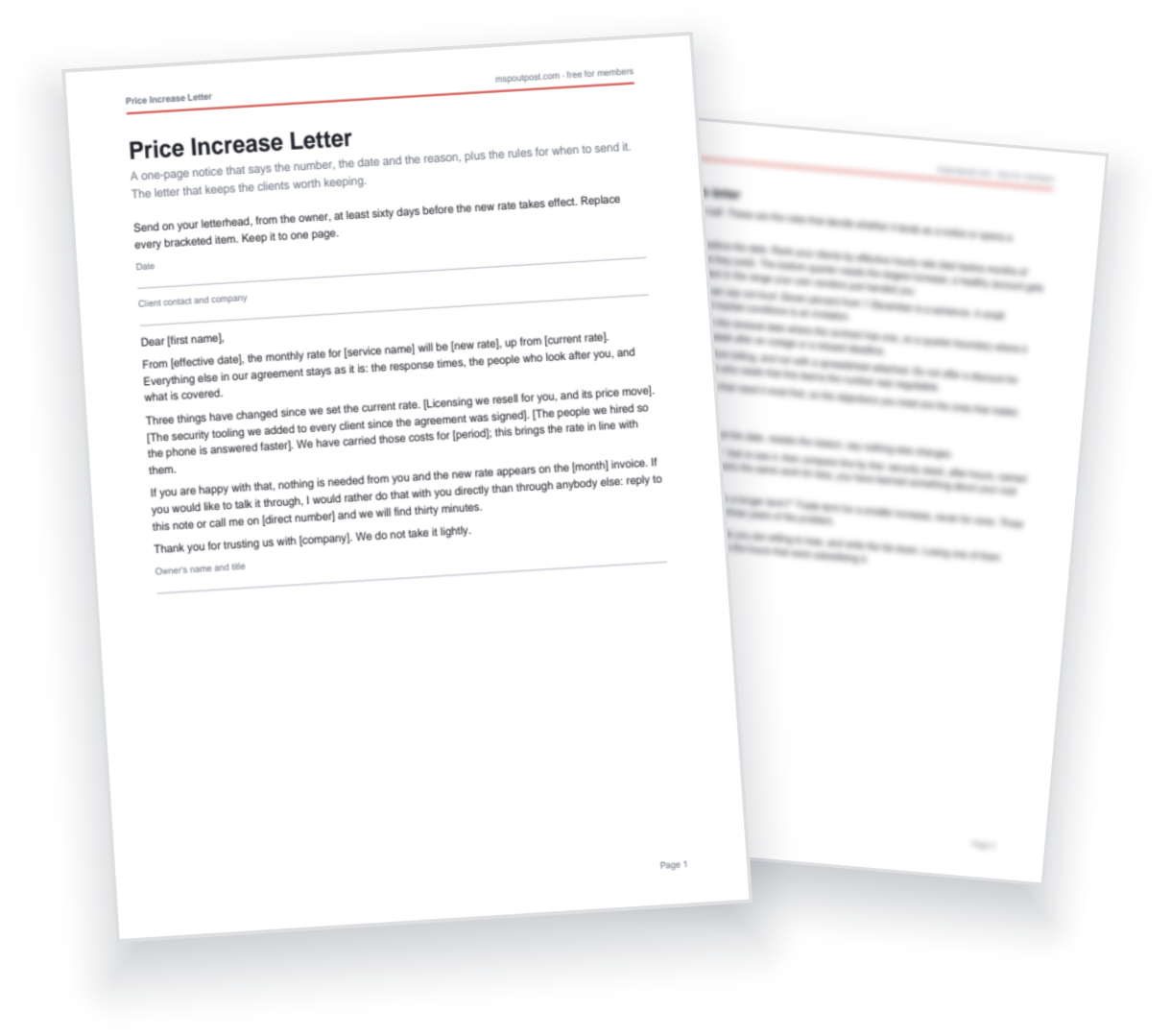
Every price increase that goes badly goes badly the same way: no number, no date, no reason, and a letter from billing rather than from the person the client signed with. This template is the fix. Four paragraphs, blanks marked, and a second page with the rules that make it a notice rather than a negotiation.
Use it with the guide on raising prices, which covers how to pick the number before the date and what to say when the three usual replies come back.
How to Use It
- Pick the number before you pick the date. Rank your clients by effective hourly rate first. The letter is about one client's rate, and a number you have not worked out is a number you will negotiate away.
- Replace every bracket with a fact. The rate, the date, and the three costs that moved. A letter that goes out with a bracket still in it is the one the client forwards to everybody.
- Send it from the owner, sixty days ahead. On your letterhead, from the person the client signed with, on the renewal date where the contract has one and a quarter boundary where it does not.
When Not to Use It
Do not send it in the week after an outage or a missed deadline: the same words that read as a notice on a quiet month read as an invoice for the failure. Fix the service, then send it on the next boundary. It is also the wrong tool for a single resold line a vendor has put up. That usually moves under the agreement's own clause and needs a note, not a notice.
