By the end of this guide you will have a price increase you can defend in one sentence, a letter that goes out on a date you chose, and an answer ready for each of the three objections that always come back. You will also know which clients you are prepared to lose, because a price increase with no answer to that question is a discount waiting to happen.
Why the Increase Never Happens
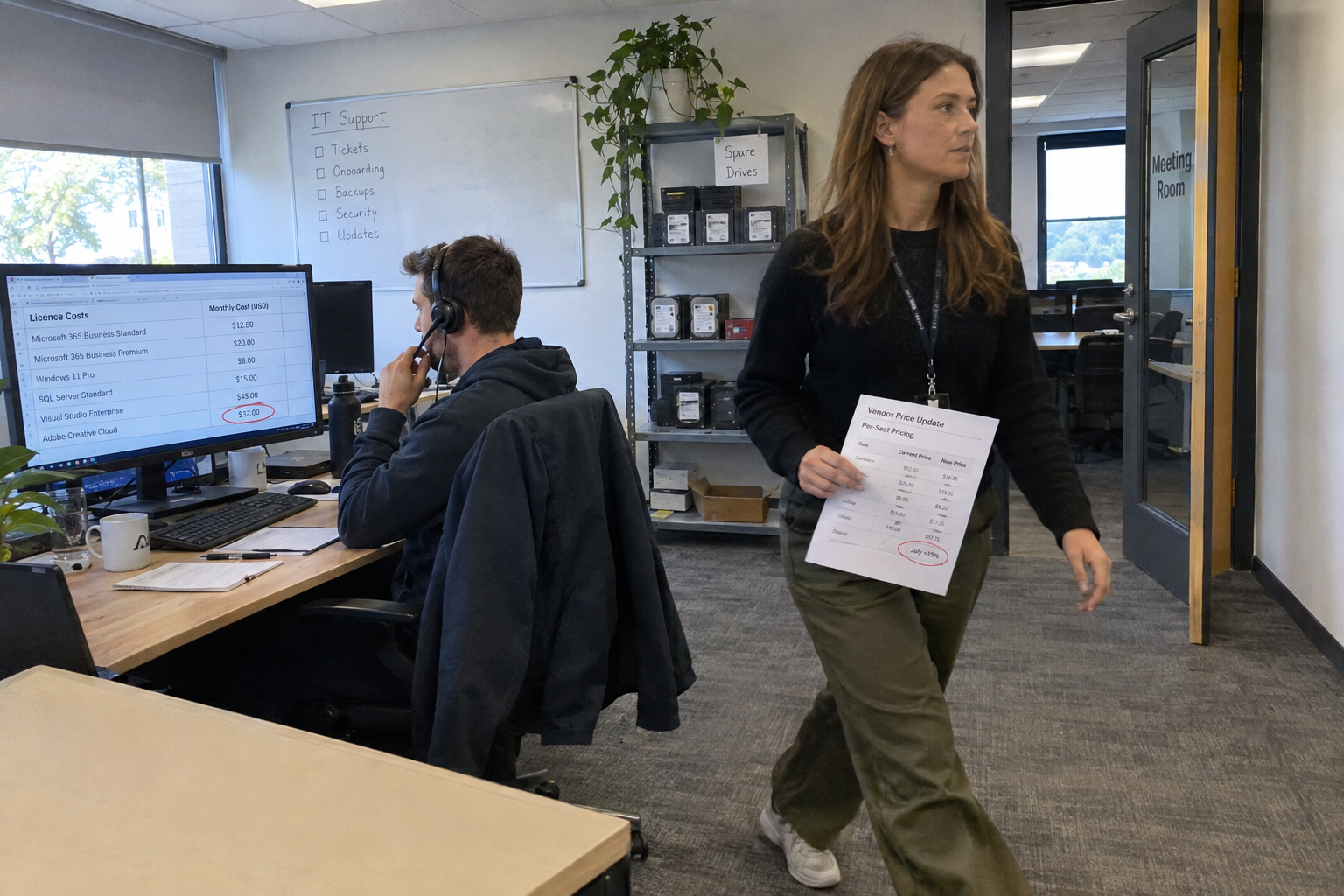
Most MSPs are underpriced for a boring reason: the last price was set on the day the contract was signed, and every cost since then has gone up while the invoice stayed still. Vendor renewals arrive at 8 to 15 percent. Technician pay moves every year. The client added twelve seats and two locations under a per-user rate that was thin when it was written. Nobody decided to be underpriced; they decided not to have an awkward conversation, twelve times.
The conversation is awkward because it is usually held with no number, no date and no reason. Fix those three and it becomes a notice, which is what it should have been all along.
Pick the Number Before the Date
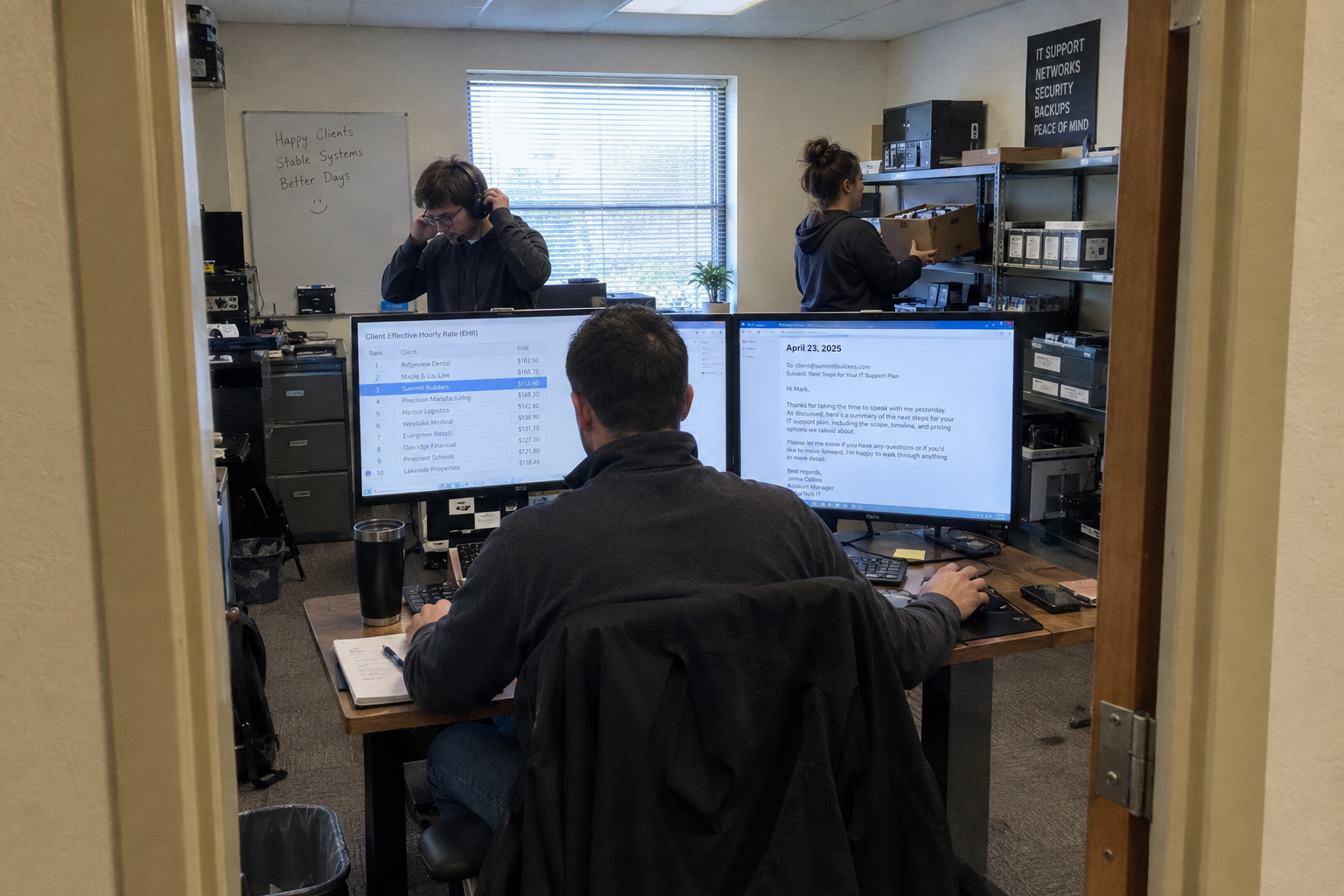
Start from cost, not from what feels safe. For each client, take the last twelve months of hours from the PSA, the licenses you resell for them, and the tools you run on their behalf, and divide by what they paid. That is the effective hourly rate on the account. Rank the list. The bottom quarter is where the increase matters, and it is usually larger than you expected.
- Below your cost to serve: the increase is whatever gets the account above cost, or the account goes. There is no version of this where you keep it at a loss.
- Thin but above cost: bring it to your standard rate over two renewals, and say so in the letter.
- Healthy: an annual adjustment tied to your own cost increases, in the range your vendors just handed you.
Round to a number you can say out loud without apologizing. "Seven percent from 1 December" is a sentence. "A small adjustment to reflect market conditions" is an invitation to negotiate.
The Letter
Send it in writing, sixty days before it takes effect, from the owner and not from billing. Four paragraphs, no more:
- What is changing and when: the new rate and the date, in the first sentence.
- Why: two or three concrete things that went up, named. Licensing you resell, the security tooling you added since the contract was signed, the people you hired to answer the phone faster.
- What they keep: the response times, the named people, the things in the agreement that have not changed.
- What to do next: nothing, if they are happy. A call with you, not with an account manager, if they are not.
Do not attach a spreadsheet. Do not offer a discount for signing early, because the client who reads that sentence learns that the number was negotiable. And do not send the letter to every client on the same day: send it to the accounts that need it most first, so the objections you meet are the ones that matter.
Timing
The date is the renewal date where the contract has one, and the start of a quarter where it does not. Never the week after an outage, and never the week after you missed a deadline. If the account is mid-argument about something else, settle that first; a price increase landing on top of an open ticket reads as a punishment.
The Three Objections
Every price increase produces the same three replies. Write the answers before the letter goes out, because the first one usually arrives within the hour.
- "We were not told." This is the letter working. Point at the date, restate the reason, and say that nothing else in the agreement changes. Do not re-explain the whole business.
- "Your competitor quoted us less." Ask to see it. Nine times in ten the quote covers less: no security stack, no after-hours, no named engineer. Walk through your agreement line by line against theirs, and offer to help them compare properly. If the quote genuinely covers the same work for less, you have learned something about your cost base, and the client may still stay for the relationship.
- "Can we keep the old rate if we sign for longer?" Sometimes, and only if the longer term is worth it to you. A three-year term at a rate that is already below cost is three years of the problem you are trying to fix. Trade term for a smaller increase, never for none.
The Clients You Will Lose
Decide in advance which accounts you are willing to lose, and write the list down. It is usually the ones at the bottom of the effective-rate ranking, and losing them raises your average rate and frees the technician hours that were subsidising them. If a client on that list leaves, you have not lost a client; you have ended a discount.
Then watch the numbers for a quarter. The increase that felt dangerous in the letter is, on the invoice, a line most clients never read twice.

mspoutpost.com/articles/raising-prices-without-losing-clients
Written by Graham Whitfield
MSP Outpost publishes information, not legal, financial, insurance, tax or compliance advice, and reading it creates no professional relationship. For decisions about your business, talk to a qualified professional.